


Some Non-Fiction Books to Convince You To Read More Non-Fiction
- Sep 9, 2021
- 5 min read
Hello friends and happy Thursday!
Welcome to today's now post, all about my favourtie non-fiction books.
I used to have a bit of a wonky relationship with non-fiction. For such a long time, I was convinced that I just did not like it. I thought that it was always boring, and that no matter what, it was not worth the effort. Still, I picked up maybe one or two non fiction books every year to give them a shot, and even though I enjoyed some of them, I was still so sure that it was not for me.
Until I realized: saying that you hate non-fiction is the same as saying that you hate books in general. There are so many sub-genres in non-fiction that it is impossible to hate them all.
Of course, I still have a resistance to non-fiction sometimes, mostly because I have the attention span of a goldfish and can only focus on one book for so long... Meaning that even though the book can be informative and on a subject I am passionate about, I will lose interest after a while because I like to get through books quickly.
However, I realized that needed to narrow down what I was actually interested in so that I could find non-fiction that i would enjoy. I knew that I did not want to read about science or technology. They have never been my thing, and if I started reading a book on those subjects it would probably put me in the biggest reading slump - or simply put me to sleep! I also knew that memoirs were not really my thing unless I felt like I could learn something from it, or if it was original enough that I did not find it boring (more on that later). For now, the three subjects that seem most suited for me are Greek mythology - as you may know, I am writing my MA dissertation of Greek myhtology, so I have read my fair share of non-fiction books on the subject - feminism, and anything realted to books, reading and writing.
I thought that in this post, I would tell you about four of my favourite non-fiction books.
On Writing
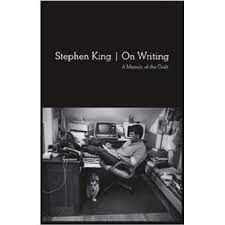
On Writing by Stephen King was probably one of the first non-fiction books I have actually enjoyed. This books works both as a memoir and a guide for aspiring writers. Stephen King is known for his writing style, so it will not surprise anyone that it is a very well written and well-paced book. The memoi part of the book was very interesting, and showed how Stephen King uses aspects of his life to write his novels.
The second part, which is a guide with advice on how to write efficiently and share your stories was a bit less interesting for me. While there are some very good advice in there - such as stop using so many adverbs, something I am still guilty of - I also thought that he was being very condescending and sometimes downright rude.
I will admit that even though the book was really dense, and had a lot of information to take it, I really enjoyed reading it, and it did not feel like a chore the way most memoirs do. I think that because I want to be a writer, and that even though I might not agree with everything he says, he is still an incredible writer, meaning that it was good to see what he had to say about the craft. And after reading it, I had the sudden burst of inspiration to wake up at 6 AM everyday to write (I did not do that though).
Come As You Are

Come As You Are was written by Emily Nagoski and focuses on women's sexuality and how it works. Using both psychological and physiological research, she talks about sexual response mechanisms, how women's bodies work in the sexual world, and how women's bodies work differently than men's.
The book is filled with important information that I believe all women should know, but also with advice and helpful tips for women who want to experience, or who are unsure about their bodies.
This is a bit of a heavy read, and while I did say that I was not interesting in scientific non-fiction books, it was still a very good book. I did find myself zoning out every now and then because of the scientific jargon and the overall feeling of being in a science class.
I would say that out of all the books in this list, this is the one that I believe is an essential read, and should be talked baout more. I would recommend this books to anyone: young teenagers discovering their sexualities, older women who want to explore themselves and their bodies, but also men, as it is a good glimpse into women's relationship with sexuality.
Dear Reader

If you are an oldie but a goodie, you might remember me talking about this book in my 2020 favourites.
Dear Reader is a memoir, written by Cathy Rentzenbrink, in which she talks about books, and how reading has been an essential part of her life, and still is today. She talks about how it has helped her get through difficult times, how it has helped her connect with her father and how it is something that she shares with her children now.
It is a very beautiful and emotional book. I t also does not feel like a typical memoir. It is alost as if you are reading fiction, letting the main character guide you through a story. As a reader, I felt a strong connection to her throughout the book, and a part of me almost yearns to have a life filled with wonderful and meaningful books.
Another detail that I love in this is the fact that after each chapter, Cathy Rentzenbrink lists a number of books that she recommend and that she herself read at certain points of her life. A wonderful book!
Pandora's Jar

As I have mentioned earlier, I have been spending a lot of time reading books about Greek mythology, both fiction and non-fiction. I think that this one is my favourite.
In Pandora's Jar, Natalie Haynes tells the stories of some women in Greek myths, how they were represneted and seen in Antiquity, and how they have been reinterpreted throughout history. I would say that ou need a bit of background on classical literature and mythology to easily get through the book, especially as Haynes herself has incredible knowledge of the classics.
This is by far the most fascinating book I have read about women in Greek mythology. It is complete, gives many different perspectives, and links the myths to current feminist discourses. Absolutely loved it.
I have a few more non-fiction books that I enjoy, but these four are the ones that I found to be the most relevant, the most well-written, and the most fascinating. I am still nowhere near being a good non-fiction reader. It is still much easier for me to pick up fiction instead and to get lost in another world,but I am making progress, and still try to find some good gems every now and then.
What kind of non-fiction books do you like? Have you read any of these? Let me know in the comments, or find me on Instagram, I would love to hear from you!
Until next time xx


Comments