


Should You Read the Classics?
- May 9, 2021
- 6 min read
Hello friends, and happy Sunday!
While finishing my last few assignments for university, I started to look back on the books that I have read as an English Literature student, and mostly on what I considered classics, as well as what I though about them. Admitedly, there are still a lot of classics that I have not read, and I was lucky enough to also study a lot of novels that were outside the literary canon. Nevertheless, with time, I have still managed to read a wide range of books and novels that could be considered classics.
To this day, I still have a bit of a love-hate relationship with the classics, and know that some of them may not be worth the time and effort it would take to read them. So, should you read the classics?
Maybe it would be good to start with trying to define what I mean by classic literarure, and the literary canon. When talking about a classic, what I mean is a piece of literary fiction that is widely accepted as something noteworthy and that should be studied. Classic literature is often a representation of a time, culture or issue, in a way that is emblematic while being of interest for different generations. In other words, they are novels that stand the test of time, and that are considered to be of interest decades or even centuries after their publication.
Many of those 'classics' are part of the literary - or Western - canon. The canon is a list of authors and novels that we, in Western culture, consider to be essentials. They are determined to be examples of good literature and authors that should be studied in depth. It is very likely that at some point during your studies, you will come across the canon, in one form or another, and that, whether you know it or not, will read a few classics.
But with the canon comes my first real issue with the classics. When looking at the Wikipedia page for the literary canon, you can find a list of authors that are 'essential'. Among this list, only three authros are women: Jane Austen, Emily Dickinson and Virginia Woolf. If classics are supposed to focus on the human experience, and be a representation of a certain time and culture, then it is one that is deeply rooted in what many have called the 'dead white male' experience.
As such, it is hard to justify giving so much importance to reading the classics and the canon, since they are not as diverse as they should be.
However, that does not mean that classics should be ignored. There is a reason why they are considered to be classics. A lot of them are incredibly well-written and crafted novels, and many are worth reading in a cultural perspective. If you like lyricism and beautiful writing, a lot of the classics fit this description and offer wonderful prose.
One of my university professors said that as humanities students, we studied the human experience, culture, and the reasons for why we behave the way we do. In a sense, literature gives us a glimpse into all of this. Through literature, we get a better sense of what things were like decades before, and if you are interested in culture and life in general, the classics are a good way to start understanding the world around you.
But if you want to read the classics, you need to understand them, which leads to another issue I someties have with the classics. They are not as accessible as you might want, and some of them are very hard to understand without a little bit of guidance. I have read a lot of novels for class that I did not enjoy, or even sometimes did not understand at all, which turned reading into a chore for me. When you get lost into the plot, struggle to understand sentences, or even just find the whole thing boring, it is hard to see the point of the book.
In high school, we were asked to read a novel that I just could not get into. I gave up after the first chapter, because it was so dense and boring that I could not bring myself to keep going. Later on, in class, we started studying scenes from the book, and the more we studied it, the more I started to enjoy this book. And so, a book that I never read became one that I was very invested and interested in.
For a lot of the classics, I think that it is important to have some sort of guidance. Sometimes, you cannot see the ingeniosity of something if you do not have the full picture. With reading the classics, the contexxt plays an important part, and you cannot always understand it all by yourself.
Even as a literature student, with 5+ years of reading and studying classics under my belts, I struggle to read some of the classics, and if the professor who assigned the book does a poor job at explaining and guiding us, I will not enjoy the book and try to forget it as soon as possible (or even, sometimes, just give up and not read it).
I think that classic have a certain importance. They are very telling of our society in the past, and, in a way, telling of our current society with the books we decide to consider classics. Ultimately, you should never force yourself to read a classic, and you can be an incredible writer, a great student and a very well rounded person without having read them. If it is something that you want to do, reading classics can be challenging but also very rewarding, as long as you know what to read, where to start, and accept that you will not understand all of it - and that is okay!
Here are some classics that I have enjoyed at different stages of my life, and that I think can be very enjoyable no matter how much of an experienced reader you are.
The Picture of Dorian Gray, Oscar Wilde
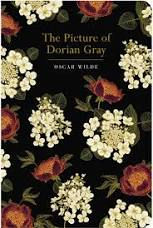
This is probably one of my favourite books of all time. Not only is Oscar Wilde an incredible writer, but the story is very compelling and easy to follow. It is one of those books that can be read on many different levels, and that you can easily enjoy without needing to understand all of the nuances. I have read it a few times, and everytime I findnew things that I had not seen before, or a new favourite quote among the many beautiful sentences in the book. And if you do not particularly enjoy lyricism in your books, you can still appreciate the engaging plot and narrative style of the story.
Pride and Prejudice, Jane Austen

The ultimate enemies to lover novel. If you are familiar with romance novels, you know what I am taling about. While Pride and Prejudice might be a bit more difficult to read - mostly because it is very slow-paced - it is still a great novel. Just like The Picture of Dorian Gray, you do not need to understand all of the nuances to enjoy the story behid it. And if you want to look for them, a lot of them are quite accessible. And of course, you can also enjoy the 2005 movie with Keira Knightley and get most of the story!
The Taming of the Shrew, Shakespeare

There are a lot of other and more well-known Shakespear novels out there, but I think that this might be my favourite. The plot is pretty easy to follow, and unlike most of his plays, you will understand the point that he is trying to make once you finish the play. Of course, it is written in old english, and the sentences are still somewhat confusing, but once you get past that, the play is very straightforward and accessible.
And a good thing with plays is that you can always watch it instead of reading it, which makes it much easier to understand and to enjoy!
To Kill a Mockingbird, Harper Lee

This was probably one of the first classics that I read and actually enjoyed. The novel is written from the perspective of a child, which makes it easy to read in terms of the narrative style, and the first part focuses mostly on trivial childhood activities, which make sit very enjoyable. The second half takes place in a courtroom, which changes the pace of the novel, but keeps it really engaging. It is also very easy to grasp the themes of the story.
There you have it! What do you think about the classics? Are they important to you? I would love to know! If you want to share your opinion with me, I would love to hear it! You can find me on instagram here so we can have a chat!


Comments